Montessori Program

Montessori Program

‘What the hand does, the mind remembers’ – Maria Montessori

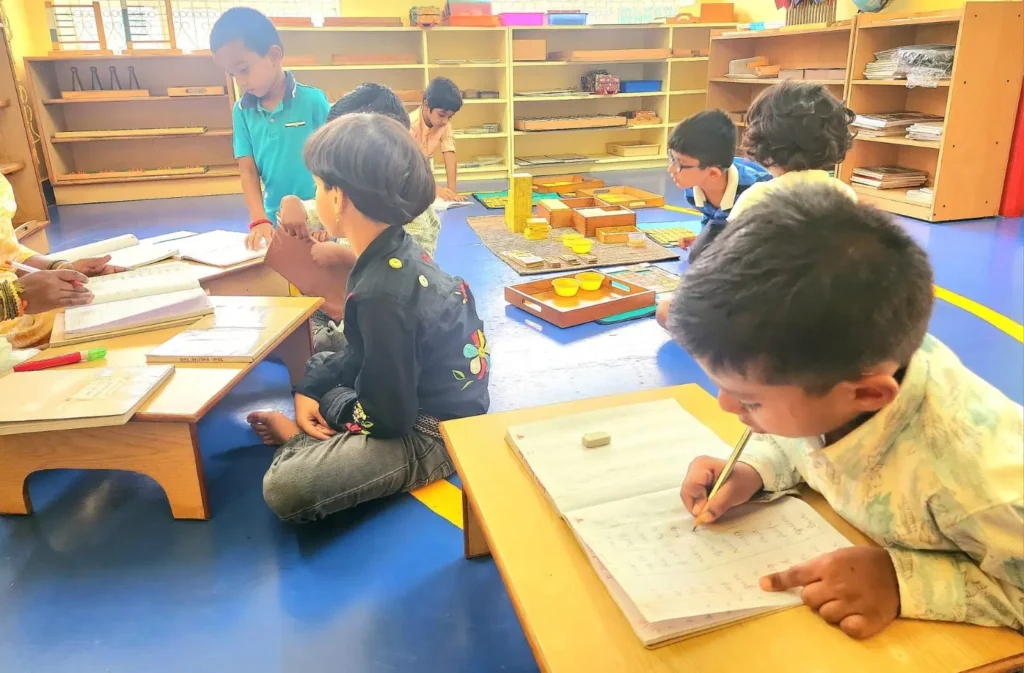
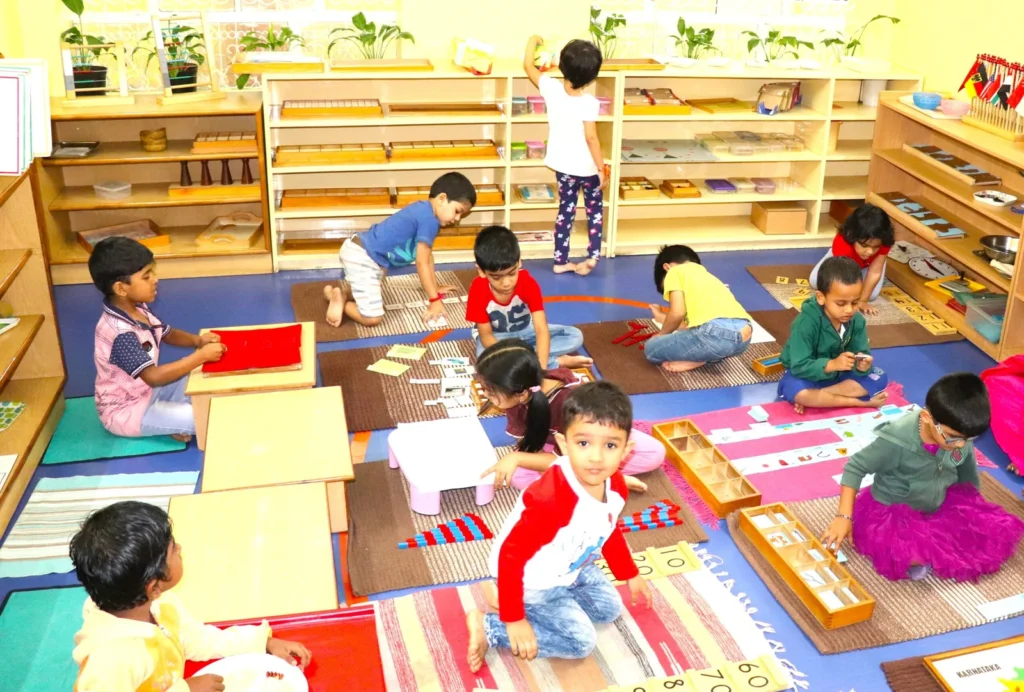
The Montessori approach at Child-Care Montessori is not a method we borrow from, but the foundation on which our preschool is built. Here, children learn through purposeful work, hands on exploration and carefully prepared environments that honour their natural curiosity and pace. With complete Montessori materials, trained educators and a calm, child centered setting, we create an environment where independence, focus and confidence grow every single day.

Age criteria

Level 1

2.5 years to 3.5 years

Level 2

3.5 years to 4.5 years

Level 3

4.5 to 5.5 years

Extended Session

5.5 to 6.10 years

Timings: Batch 1: 8:30 am to 12:30 pm Batch 2: 1:00 pm to 5:00 pm

CURRICULUM

Exercises of Practical Life: (EPL)

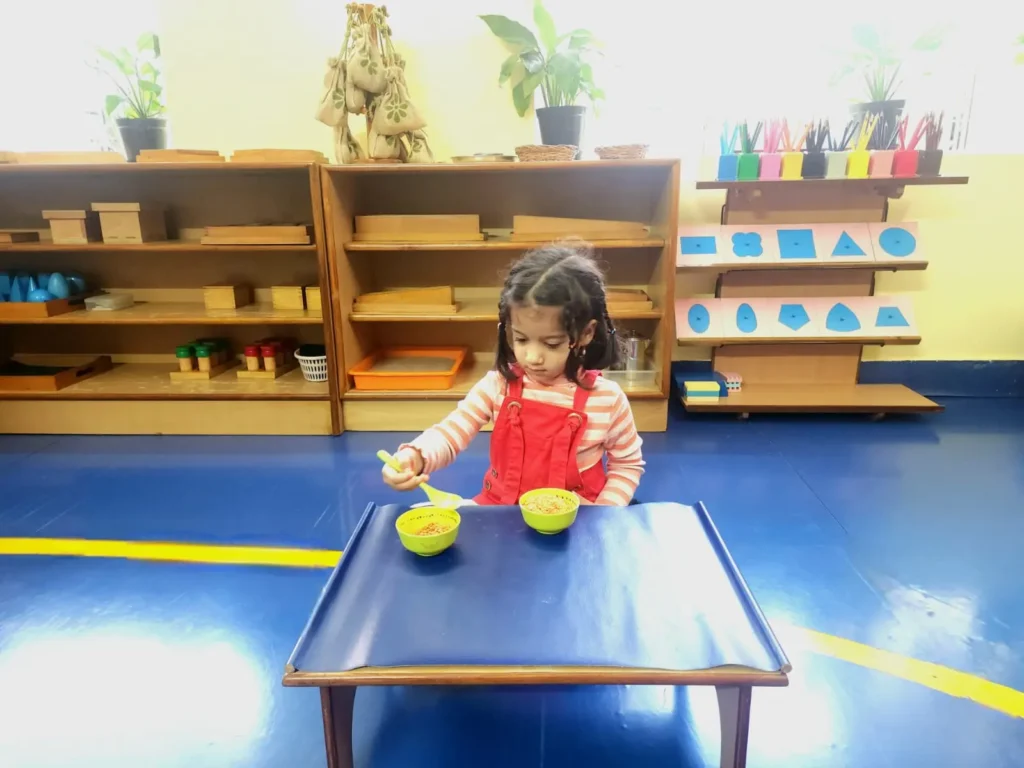
Practical life activities are the everyday activities that children witness around them. There are three distinct nature of activities:

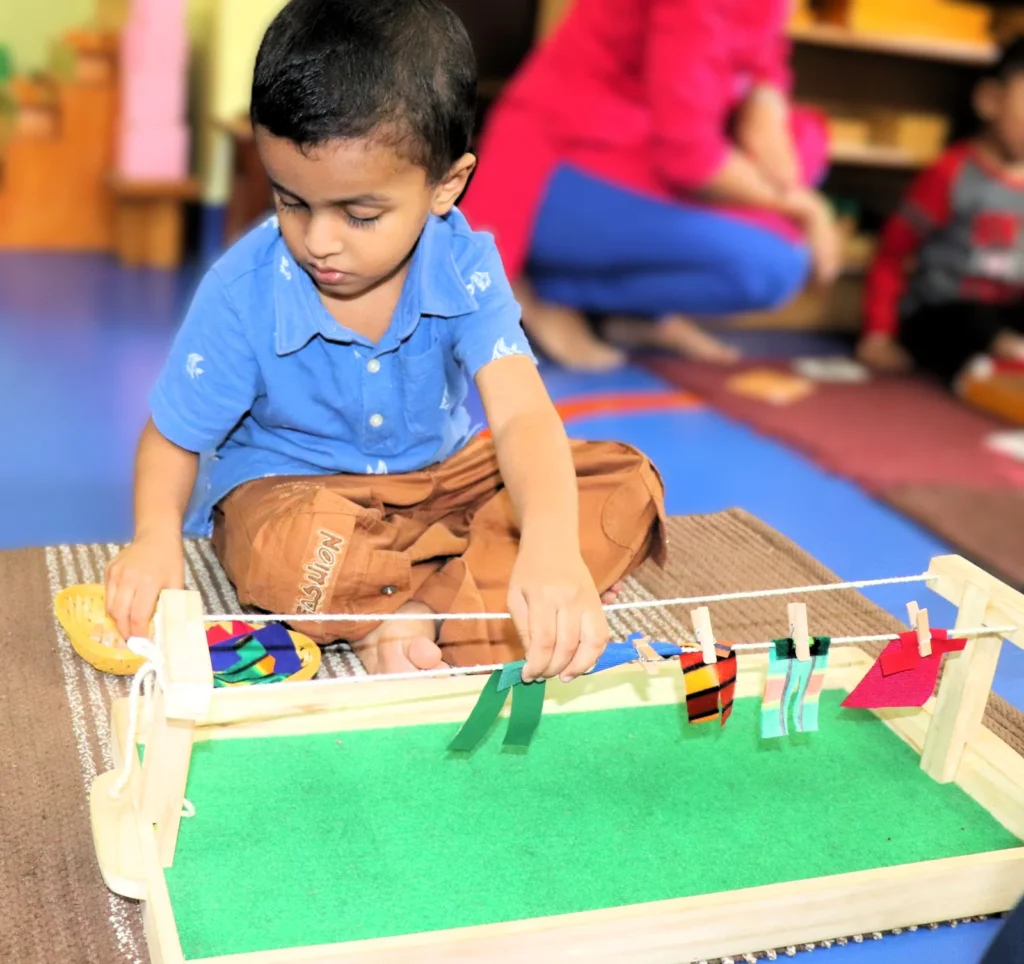
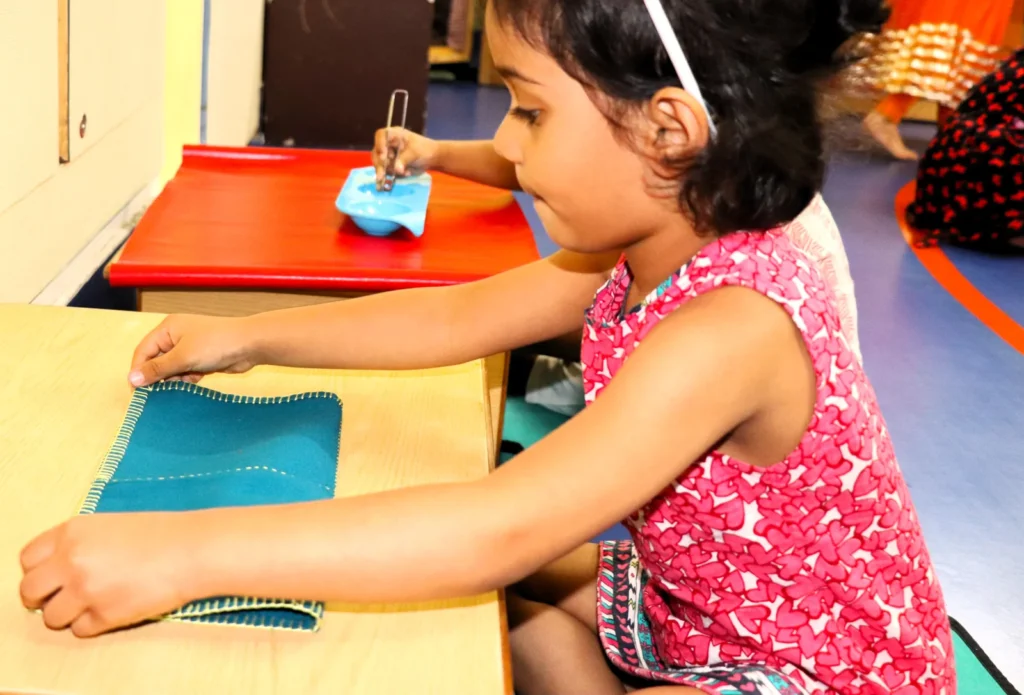
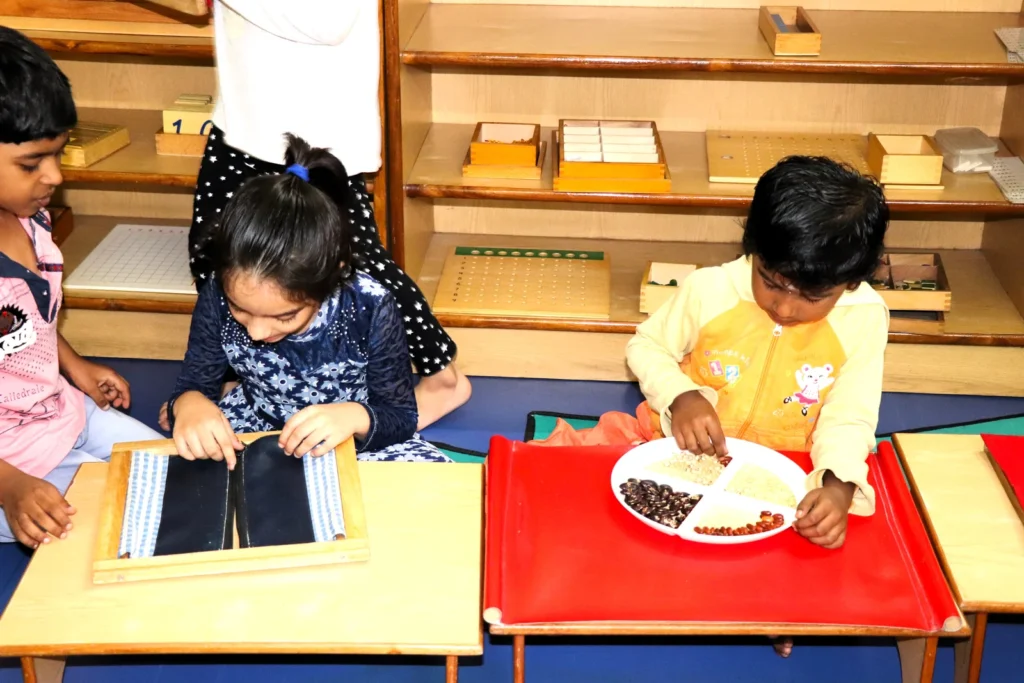
Exercises of Practical Life (EPL) activities in the Montessori method aim to equip children with essential life skills that foster independence, coordination, concentration, and a sense of responsibility. Through tasks like pouring, buttoning, sweeping, and arranging, children learn how to care for themselves, others, and their environment in a structured and purposeful way. These hands-on activities are designed to mirror real-life tasks, allowing children to develop fine and gross motor skills while building confidence and self-discipline. The mastery of EPL activities forms a strong foundation, empowering children to take on more complex learning experiences with focus and a sense of achievement.

Sensorial

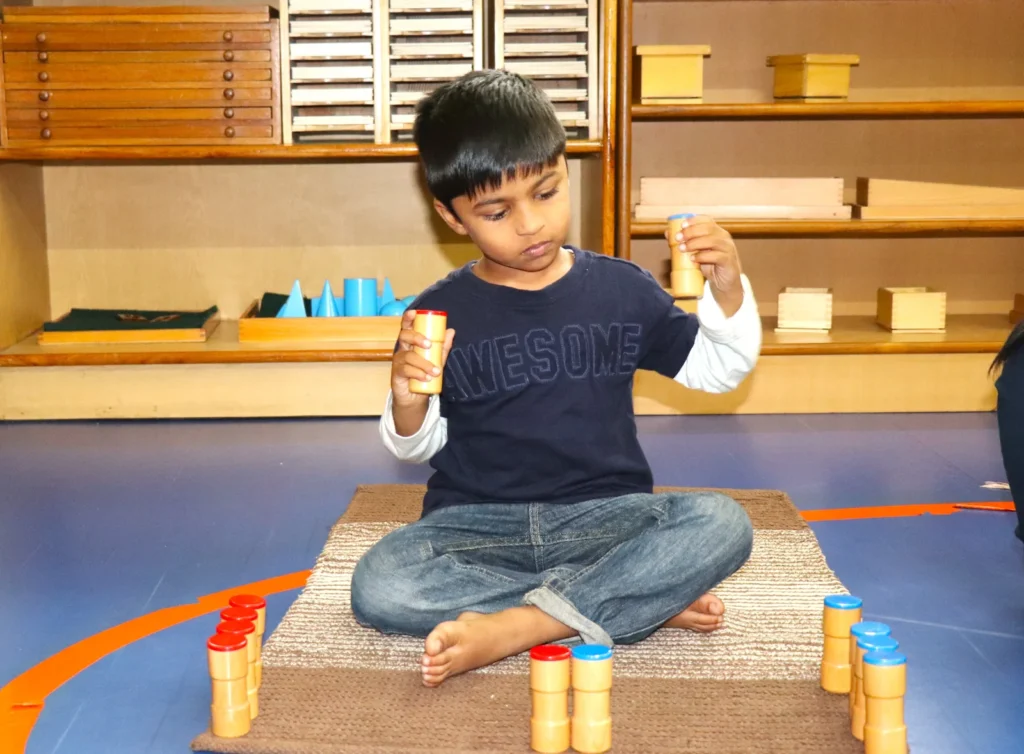
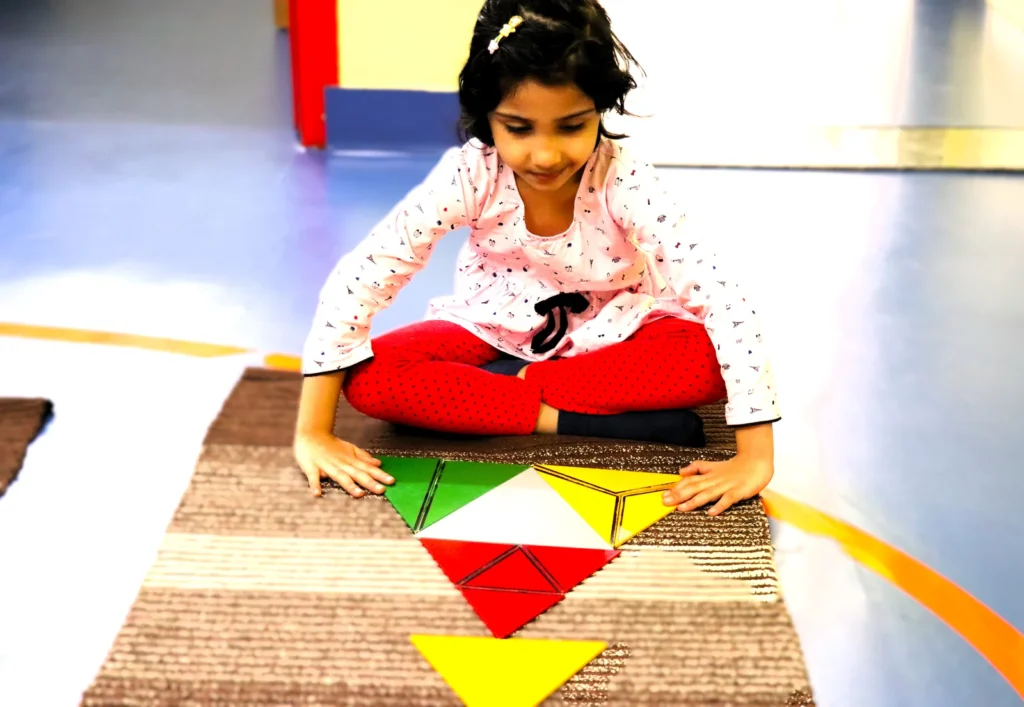
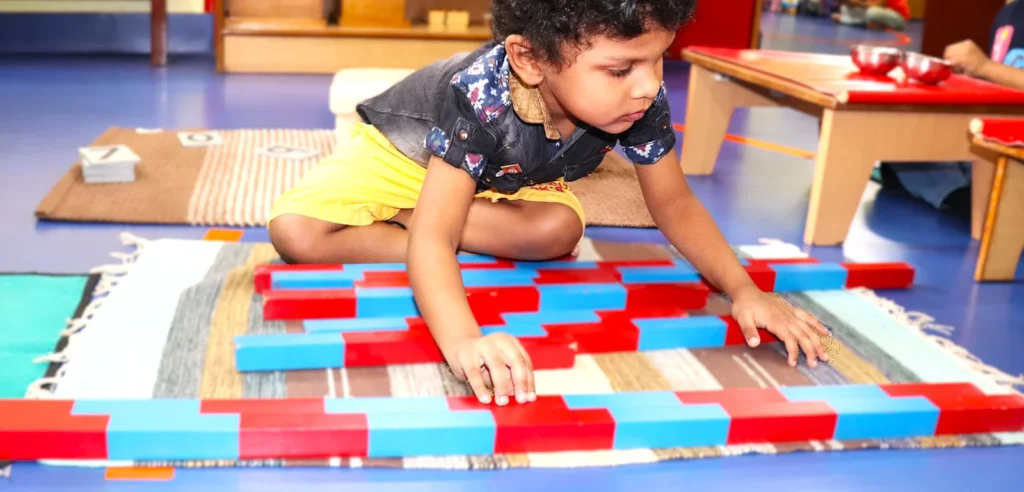
Sensorial activities in the Montessori method are designed to refine and sharpen a child’s senses, providing them with tools to explore, categorize, and understand the world around them. Through hands-on materials that isolate and emphasize qualities such as size, shape, colour, texture, and sound, children engage in focused exploration that enhances their perception and cognitive development. These carefully crafted exercises not only build sensory awareness but also lay the groundwork for mathematical, linguistic, and scientific concepts, creating a rich, multisensory foundation for lifelong learning.

Arithmetic

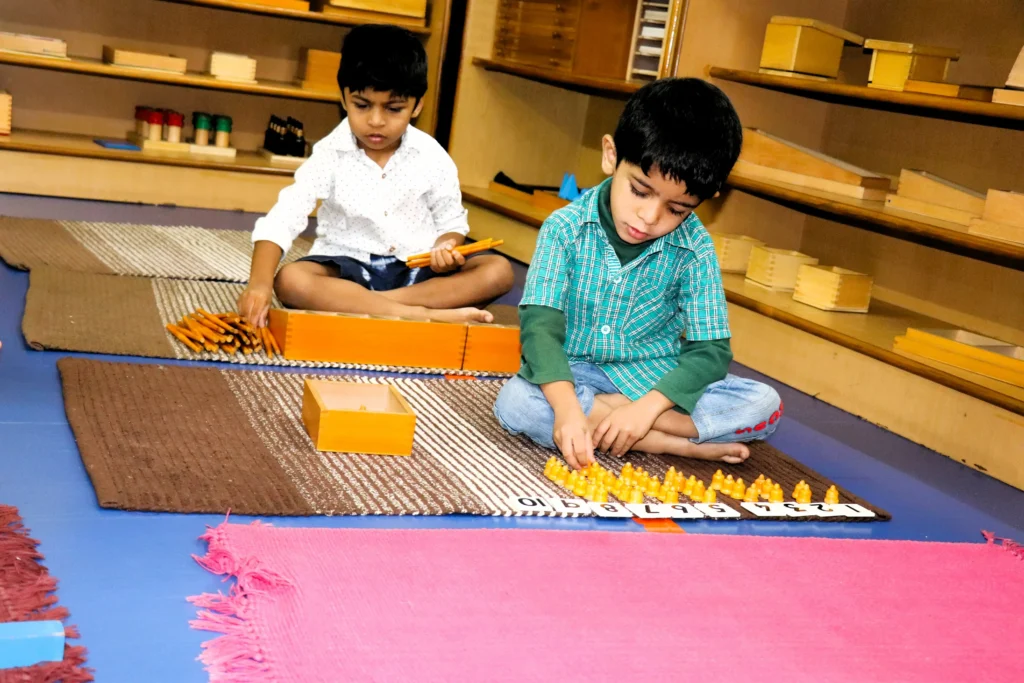
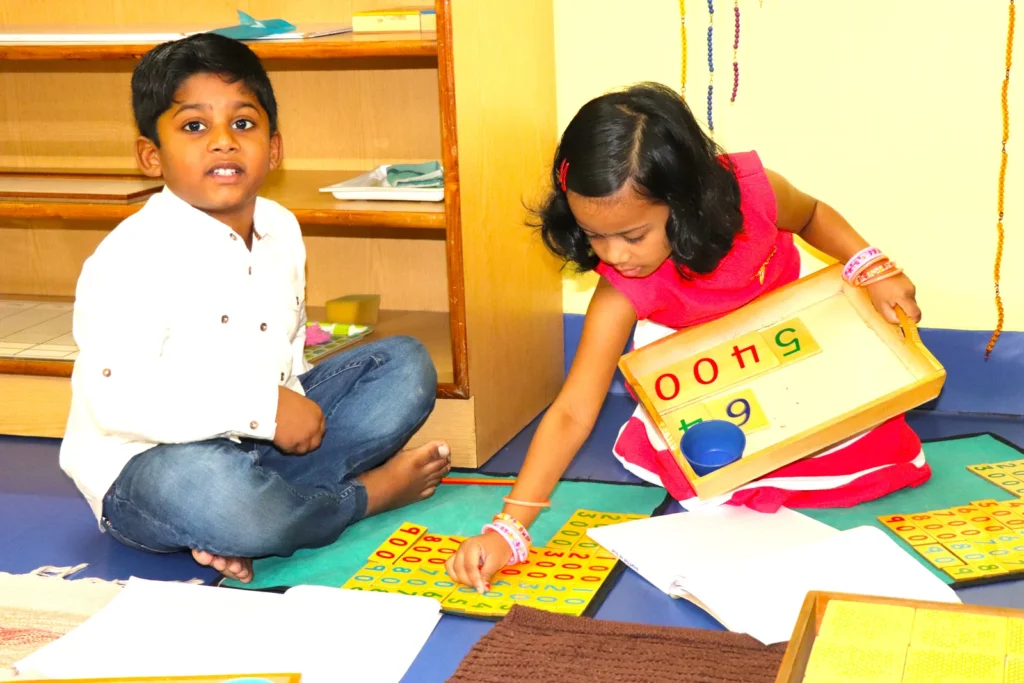
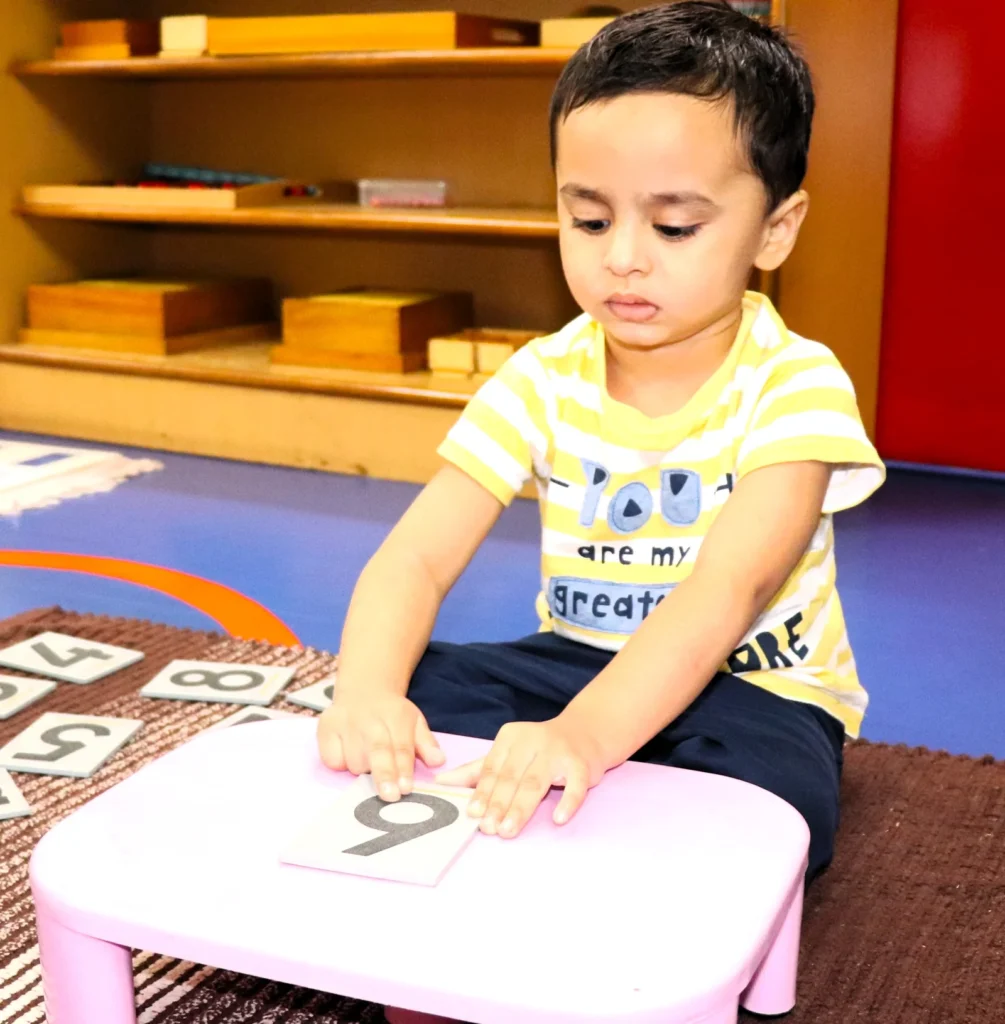
Mathematics activities in the Montessori method are thoughtfully crafted to make abstract concepts tangible, allowing children to understand mathematical principles through hands-on experience. Using materials like number rods, beads, and sandpaper numerals, children explore numbers, quantities, and mathematical operations in a way that builds a concrete understanding. This approach not only enhances their grasp of numbers but also fosters problem-solving skills, logical thinking, and a true appreciation for the beauty of mathematics. Montessori math activities empower children to approach math with confidence, curiosity, and joy, establishing a strong foundation for future learning.

Language

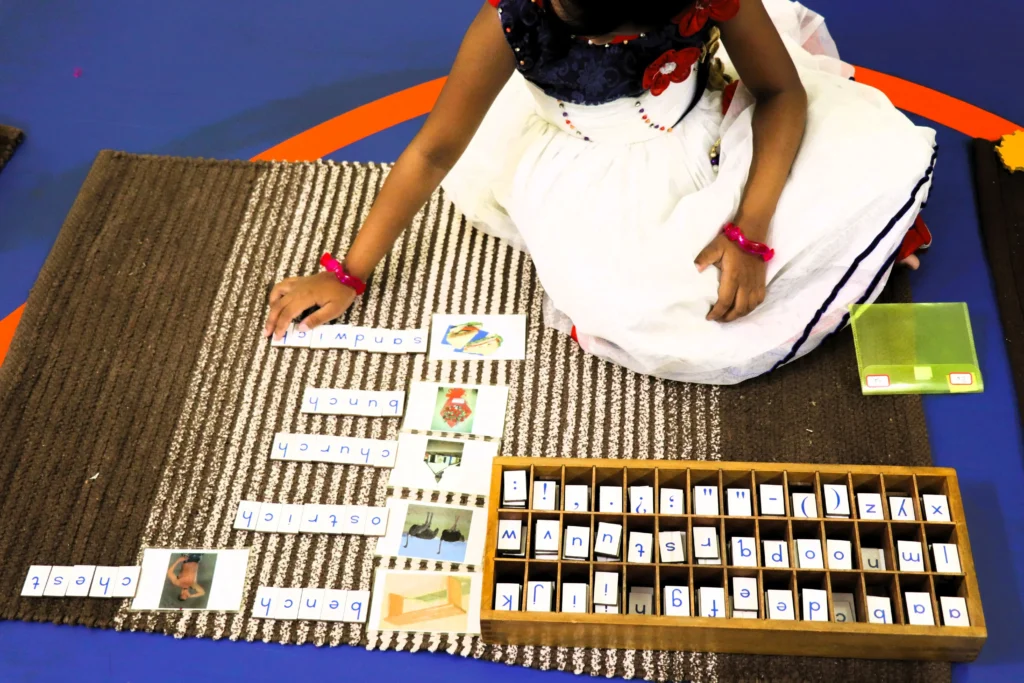
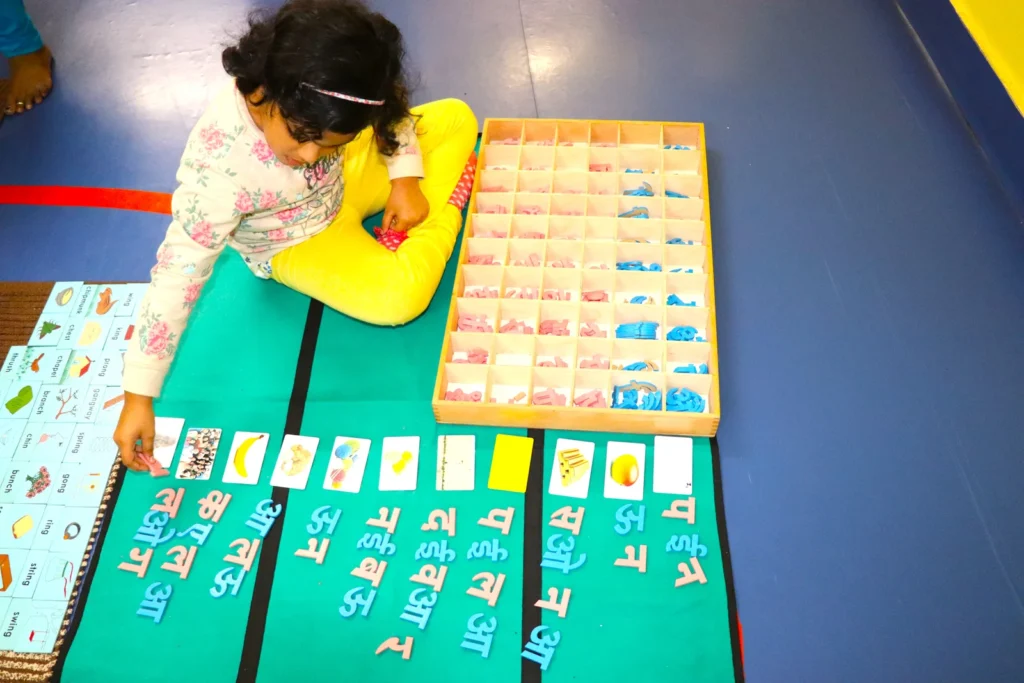
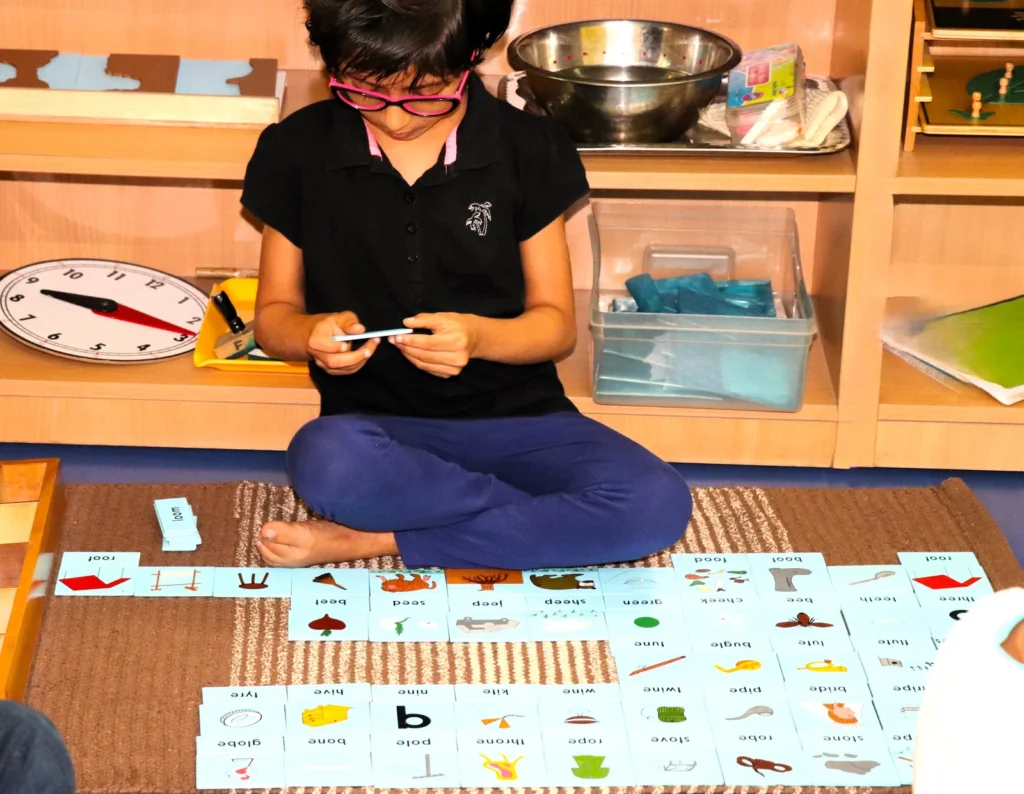
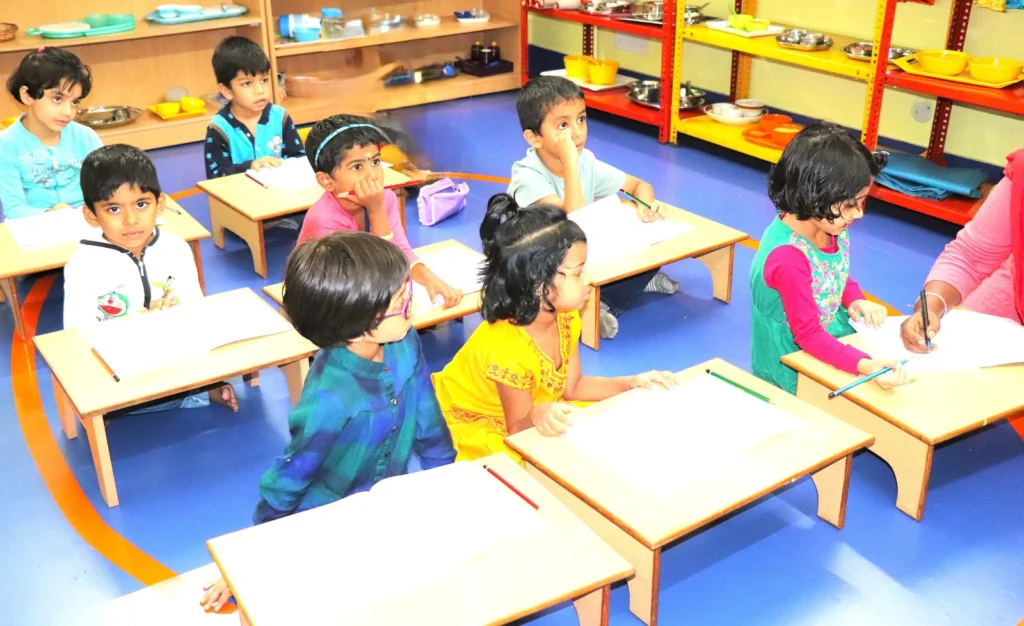
Language activities in the Montessori method are designed to nurture a child’s natural love for words and communication. Through materials like sandpaper letters, movable alphabets, and storytelling, children explore sounds, symbols, and language structure in a tactile and engaging way. These activities build foundational skills in listening, speaking, reading, and writing, allowing children to express themselves confidently and creatively. By immersing children in a language-rich environment, Montessori language activities lay the groundwork for literacy, critical thinking, and effective communication, empowering them to connect with others and the world around them.

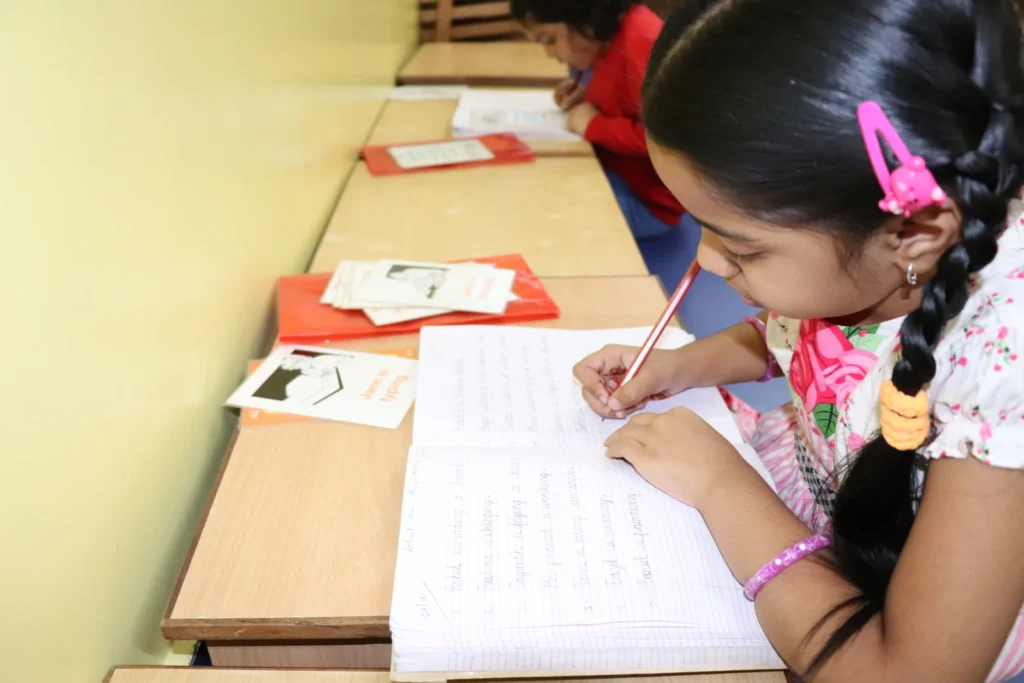
Reading is taught phonetically. “Phonetic” means by sound and the Montessori reading program is based on the sounds, as opposed to the names associated with the alphabet. Children listen to the sound, see the shapes and with the help of tracing, train the muscles needed for writing. They are then ready to spell simple words and eventually cultivate writing skills.

Interactive sessions like story telling, conversation, circle time, ” I Spy” games, contribute immensely to the growth of a child’s vocabulary. These preparatory activities enable children to display ”explosion” into writing around the age of 5 years.


Geography, Science & Social Studies

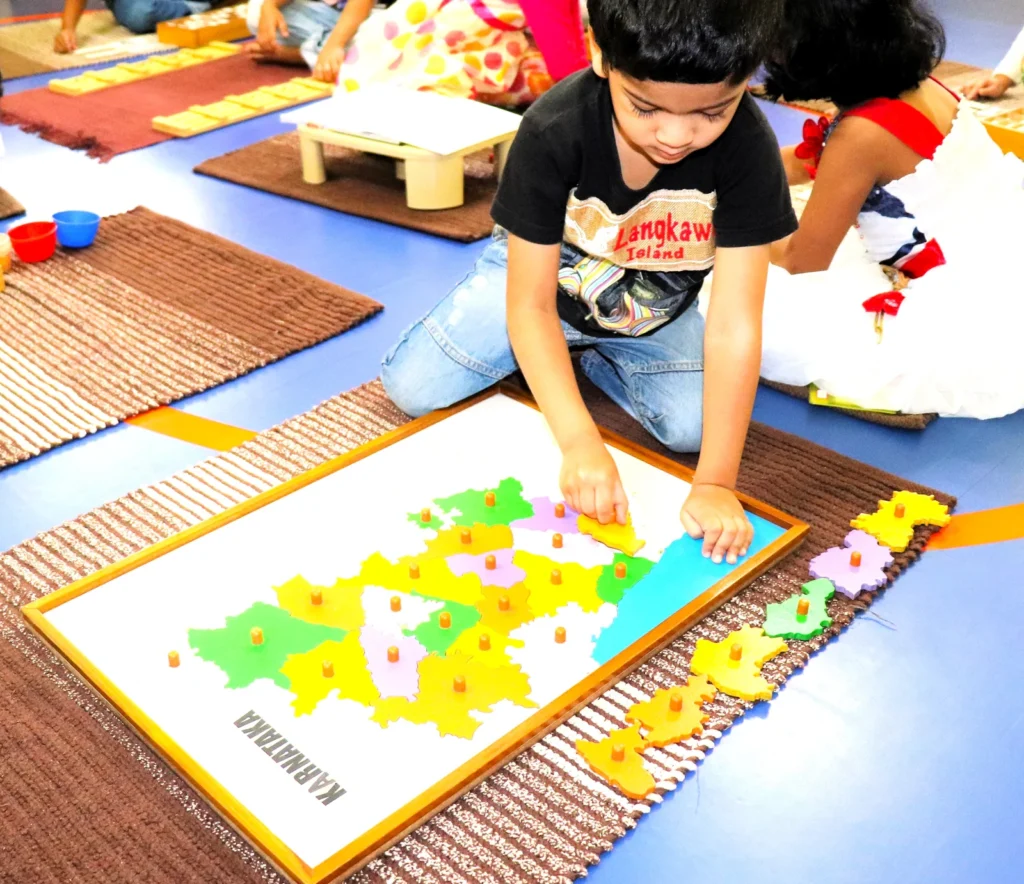
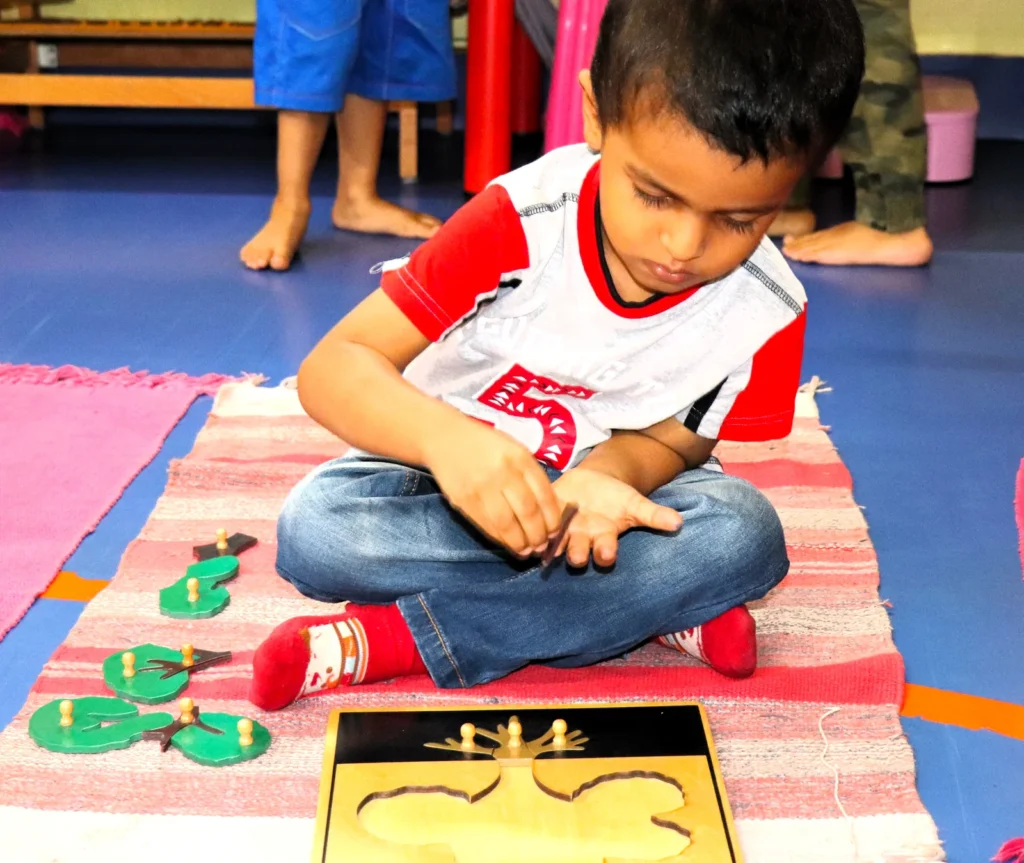
Geography, science, and social studies activities in the Montessori method invite children to discover the wonders of their world and the cultures within it. Through hands-on materials like globes, puzzle maps, botany puzzles, and experiments, children gain a deep appreciation for natural phenomena, diverse ecosystems, and human societies. Montessori activities in these areas encourage curiosity, exploration, and respect for the interrelation of life. By nurturing a global perspective and a sense of responsibility for the environmental, these lessons inspire children to understand and engage with their world thoughtfully and responsibly.

Extended Session

Children who turn five on or before May 31st of the academic year are advised to be a part of our Extended Session program.

Completing the four-year Montessori cycle is a transformative journey that allows children to engage deeply with their learning environment and develop essential skills like writing & reading at their own pace. Over these four years, children progress through distinct developmental stages, building on their knowledge and experiences as they advance from early exploration to mastery of concepts. This cyclical structure fosters strong relationships with peers and educators, promoting a sense of community and collaboration

As children complete the cycle, they emerge not only with a solid academic foundation but also with enhanced independence, confidence, and a lifelong love of learning, well-prepared for future educational challenges.

Ready to Begin Your Child’s Montessori Journey?

We believe Montessori education offers more than academics—it’s a way to nurture curiosity, independence, and a love for learning from an early age.
Scroll to Top